EGOFLOTT BUTYLKAUTSCHUK
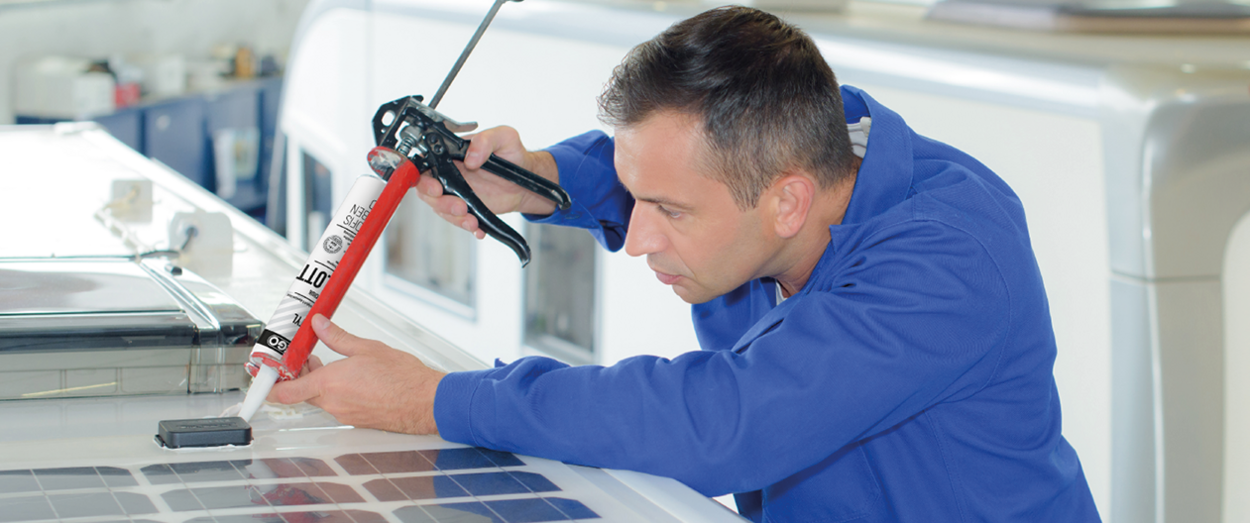
Butyl sealant for vehicle & roof sealing
- can be painted over
- compatible with bitumen
- compatible with paint
- free from aromatics
- resistant to ageing, weathering and UV radiation
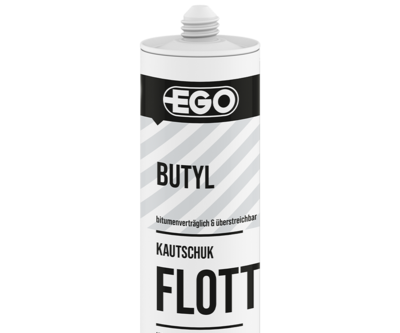
Butyl for squeezing out of the cartridge for sealing roof or sealing foils as well as vehicle parts in trucks or caravan joints. Flowable Butyl as a Hotmelt for industrial processing with drum melting systems or a kneadable Butyl for manual sealing of pipe openings or traps.
Butyl as a sealant is known in the classic sense in the tape sector. Modified formulations allow Butyl to be offered in cartridges. Butyl from the cartridge allows a permanently elastic joint when cured. In contrast, the malleable, kneadable Butyl can be applied ready for use. Drum-melting butyls enable application-specific applications through the use of an industrial drum-melting system and can therefore be laid precisely and application-oriented.
EGO Butyl tapes are malleable sealing tapes with precise profile structures, which have been used as an addition or alternative to the usual injection sealants for more than 40 years. EGO Butyl, which is ready for immediate use, is particularly noted for high and long-lasting adhesive power, ageing and weather-resistance – just pure Butyl. The versatile material properties of the EGO Butyl products and the individual forms offer an extraordinary range of possible applications.They comply with the application recommendations of the IVD leaflet no. 5. International test certificates and expert reports confirm the excellent characteristics of the EGO products.
Compatibility of the EGO Butyl tapes with sealants must be confirmed by the respective manufacturers. We generally recommend using our EGO oxim and alcoxy silicone sealants.
The EGO Butyl qualities generally differ in:
Our flexible production engineering, developed in-house, ensures customised production with high quality standards (DIN ISO 9001). As a result, our EGO Butyl tapes have an extraordinarily large product range when it comes to shape, structure and properties:
We are happy to directly implement your individual customer requirements and offer EGO Butyl tapes not only as tapes, but also in a wide selection of:
On the basis of extensive, long-term experience, we have developed excellent packaging techniques. They are particularly reflected by the economic and budget-conscious packaging of Butyl rolls. For example, the roll length is often adjusted to the standard cardboard box dimensions, which in turn are suitable for pallet shipping. Moreover, we use product stabilisation methods which have been tried and tested over many years to ensure safe anti-slip transport.
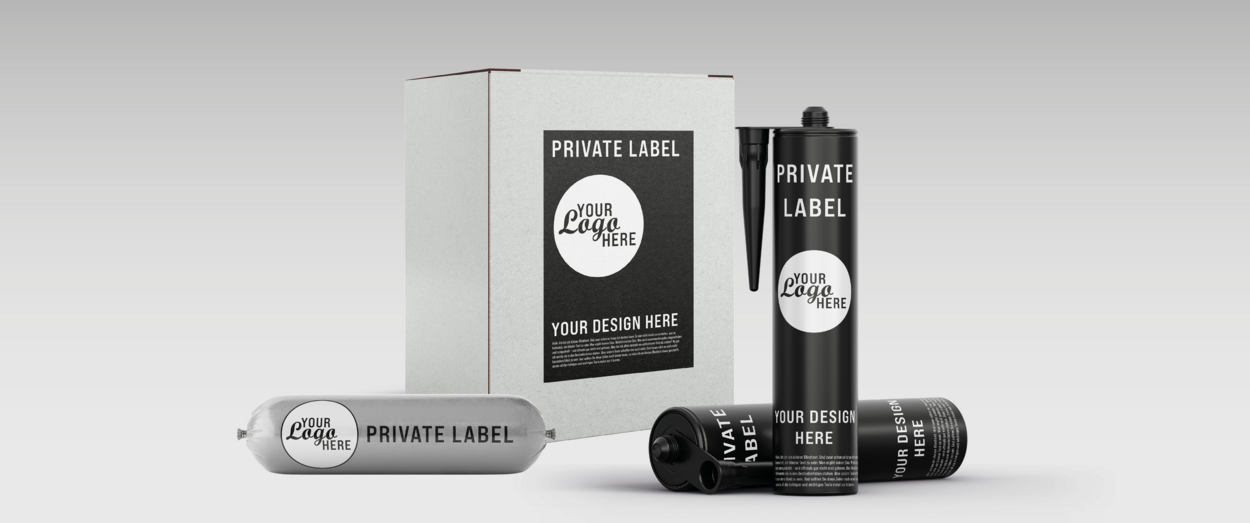
In addition to cardboard boxes with the EGO design, we also offer neutral white or individually printed boxes. The same applies to the box labels, which can be individually designed. The side panels that stabilise the rolls during transportation provide an additional option for application of customised advertising or information for use.
In addition to standard packaging in cardboard boxes, practical multi-use packaging is also available. This type of packaging is based on environmentally friendly materials and is always available.
We are happy to deliver Butyl as bulk goods barrels – packed in 200 l barrels as standard for further processing in barrel melting plants – in specially agreed Butyl qualities. Processing options for Butyl products in barrels are found in industry for a large number of application areas. Butyl products in barrels are characterised by their flow temperature of 125 °C. We are happy to provide other flow temperatures upon request.
Our Butyl sealants - whether from the cartridge, as drum-melt Butyl or in kneadable form - offer high adhesive strength and formability on almost all substrates. Areas that are particularly difficult to access are well covered here, where laying a tape would only be possible with great effort.
Whether in the customer layout or in neutral packaging or in our classic EGO packaging - we find solutions for our customers so that the products find their market. We are happy to advise on application examples & substrates or create the new layout for our customers. We also advise on the legal requirements.
Es ist im Grunde ganz einfach. Eine gute Butylqualität hat nahezu keinen Eigengeruch und ist geruchsfrei. Schlechtere, oftmals bitumenversetze Butyle besitzen einen stechenden und beissenden Geruch, der sofort auffällt, wenn man daran riecht. Auch fällt es häufig auf, dass Butyle niedriger Qualität schwitzig werden, wenn sie unter Sonneneinstrahlung oder Wärme geraten und die Klebrigkeit verlieren.
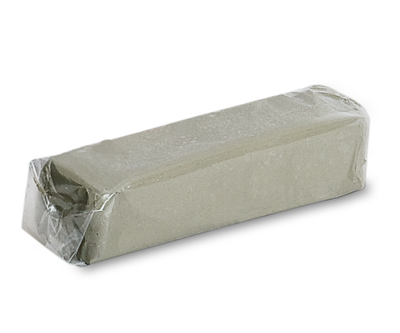
Im Grunde ist es mit Knete vergleichbar. Es eignet sich wunderbar zur Formung und kann bedenkenlos geknetet und geformt werden. Vorzugsweise sollte es dann in Rohrdurchbrüchen oder Kabelschächten für die Abdichtung offener Stellen sorgen. Somit lassen sich Gerüche oder Geräusche räumlich trennen und die Dichtung hält lebenslang.
Fassschmelzbutyl oder auch bekannt als Hotmelt eignet sich bei industriell hergestellter Abdichtung. Hierzu wird eine Fassschmelzanlage benötigt, die das Fassbutyl auf ca. 120 Grad Celsius erhitzt und es dadurch verflüssigt. Anschließend führen Düsen das Butyl in die vorgesehene Abdichtungsposition und das Butyl kühlt entsprechend wieder ab. Nach dem Abkühlprozess erstarrt das Produkt in seiner Form und verbleibt in dieser Position für immer.
Butylkautschuk passt sich durch seine Formbarkeit und Klebkraft hervorragend auf nahezu allen Untergründen für Bau- und Industrieanwendungen an. Anwendungen mit Hilfe von Kartuschen, knetbaren Varianten oder aus dem Industriefass können oftmals in schwer zugänglichen Bereichen besser abdichten. Daher machen diese butylbasierten Lösungen oftmals dort Sinn, wo das verlegen eines Bandes nicht ohne weiteren Aufwand möglich ist.
Butyle sind dauerhaft selbstklebend und sofort funktionstüchtig. Sie weisen einen sehr hohen Wasserdampfdiffusionswiderstand auf und sind darüber hinaus alterungsbeständig, witterungsbeständig, UV-beständig und langlebig.
Butyl ist ein nachhaltiges Bauprodukt. Butyle sind generell unbedenklich und häufig in modernen, ökologischen Bauprojekten wiederzufinden. Unsere Butylprodukte sind Lösemittel- und kennzeichnungsfrei und erfüllen die VOC-Anforderungen EMICODE EC 1 Plus, die Anfordeungen der DGNB (Deutsche Geseöllschaft für Nachhaltiges Bauen - Qualitätsstufe 4) und sind LEED, BREEAM und BNB verifiziert. Butyl hat eine lebenslange Funktionalität und besitzen nahezu keine Alterungserscheinungen.
Sie sind sofort einsatzfähig, liefern dauerhafte Klebkraft, sind witterungs- und UV-beständig, volumenstabil, lösungsmittelfrei, physikalisch sicher und halten praktisch unbegrenzt.
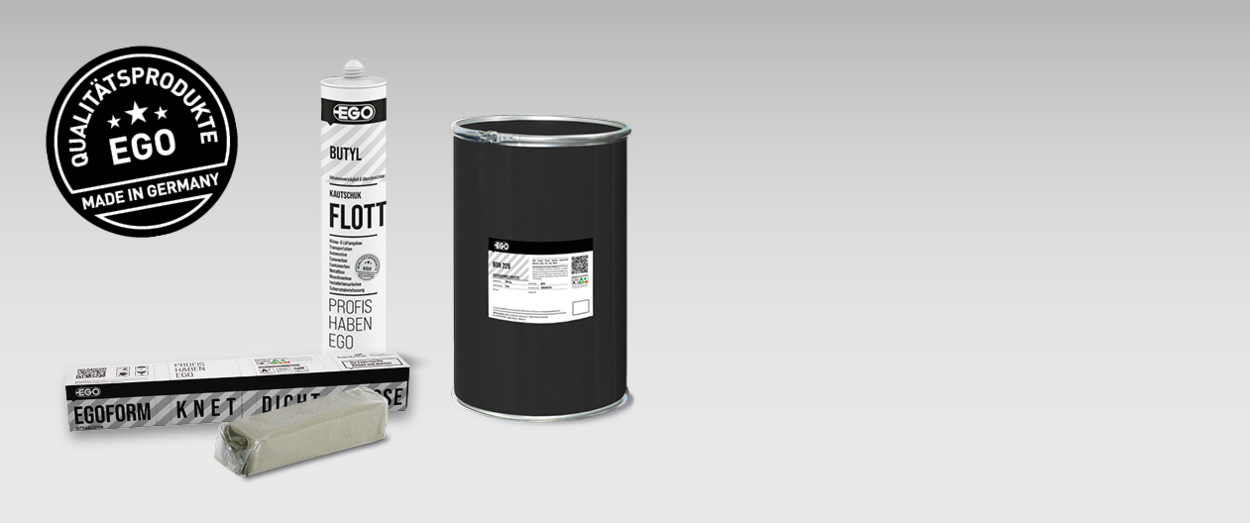
Zum Sortiment gehören EGOBUTYL 240 (KFZ/Isolierung), EGOBUTYL 242 (Tiefbau), EGOBUTYL 243 (Ausgleichsbänder), EGOBON 212 (Profil mit Seele), EGOFLOTT (spritzbarer Butylkautschuk), EGOBON 226 (Fass- oder Hot‑melt‑Butyl).
Einsatzbereiche reichen vom Fahrzeug-, Schiffsbau, Luft- und Raumfahrt über Maschinen- und Fassadenbau bis hin zu Wohnmobilen und Caravans.
Sie sind selbstverschweißend, formstabil, volumenbeständig, elastisch, wasser- und Dampfdicht, geräusch- und vibrationsdämmend sowie kompatibel mit vielen Baustoffen.
Dank ihrer physikalischen Stabilität bleibt die Qualität von Butylbändern und -profilen praktisch unbegrenzt erhalten, ohne dass Alterung eintritt.
Unterschiede bestehen bei Dichte, Druck- und Zugfestigkeit, ReißFestigkeit, Shore-Härte, Klebkraft, Schälfestigkeit und speziellen Eigenschaften wie chemischer oder lebensmittelgerechter Beständigkeit.
Ja, sie sind emissionsarm, Bitumen- und lösungsmittelfrei, physiologisch unbedenklich und Komponenten werden mit natürlichen Rohstoffen hergestellt .
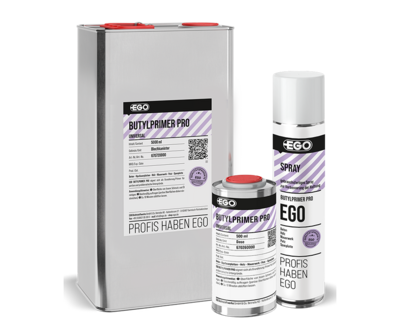
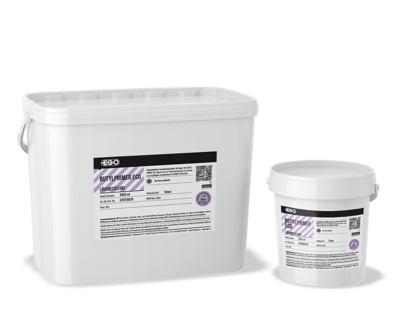
Butyl wird auf saubere, trockene und tragfähige Untergründe aufgebracht, angedrückt oder angerollt. Bei porösen Flächen empfiehlt sich ein Primer. Nach Kontakt verschweißt das Material selbst und passt sich dem Untergrund an.
Sie verfügen über kreuzlaminierte HDPE-Folien als Kaschierung – dadurch sind sie nagel-, schraub- und weiterreißfest, druckwasserdicht und radondicht, ideal für konstruktive Anschlussfugen und radonsicheren Einsatz
Ja, EGO empfiehlt die Kombination mit eigenen Oxim- oder Alkoxy-Silikonen. Kompatibilität mit Fremdsystemen sollte im Einzelfall geprüft werden.